Amon Amarth Bring Fire, Fury and Viking Grandeur to Helsinki
Soilwork and Orbit Culture set the stage for a night of uncompromising Swedish metal — live report from Helsinki Ice Hall, 26 October 2026.
By Tomi Perrakoski / Metal Madness Weekly
Some concerts are about the music. Others create an entire world around it. At Helsinki Ice Hall on 26 October, three generations of Swedish metal power — Soilwork, Orbit Culture and headliners Amon Amarth — delivered an evening of soaring melodies, crushing riffs, relentless drums and spectacular stage production.
Travelling from Turku to Helsinki beneath dark autumn skies and heavy clouds, expectations were high. Thanks to media accreditation provided by Live Nation, I had the opportunity to experience this remarkable bill firsthand and document the evening for Metal Madness Weekly. The journey through the darkness seemed an appropriate beginning for a night that would move from melodic intensity to cinematic destruction before Amon Amarth transformed the arena into a world of fire, mythology and Viking grandeur.
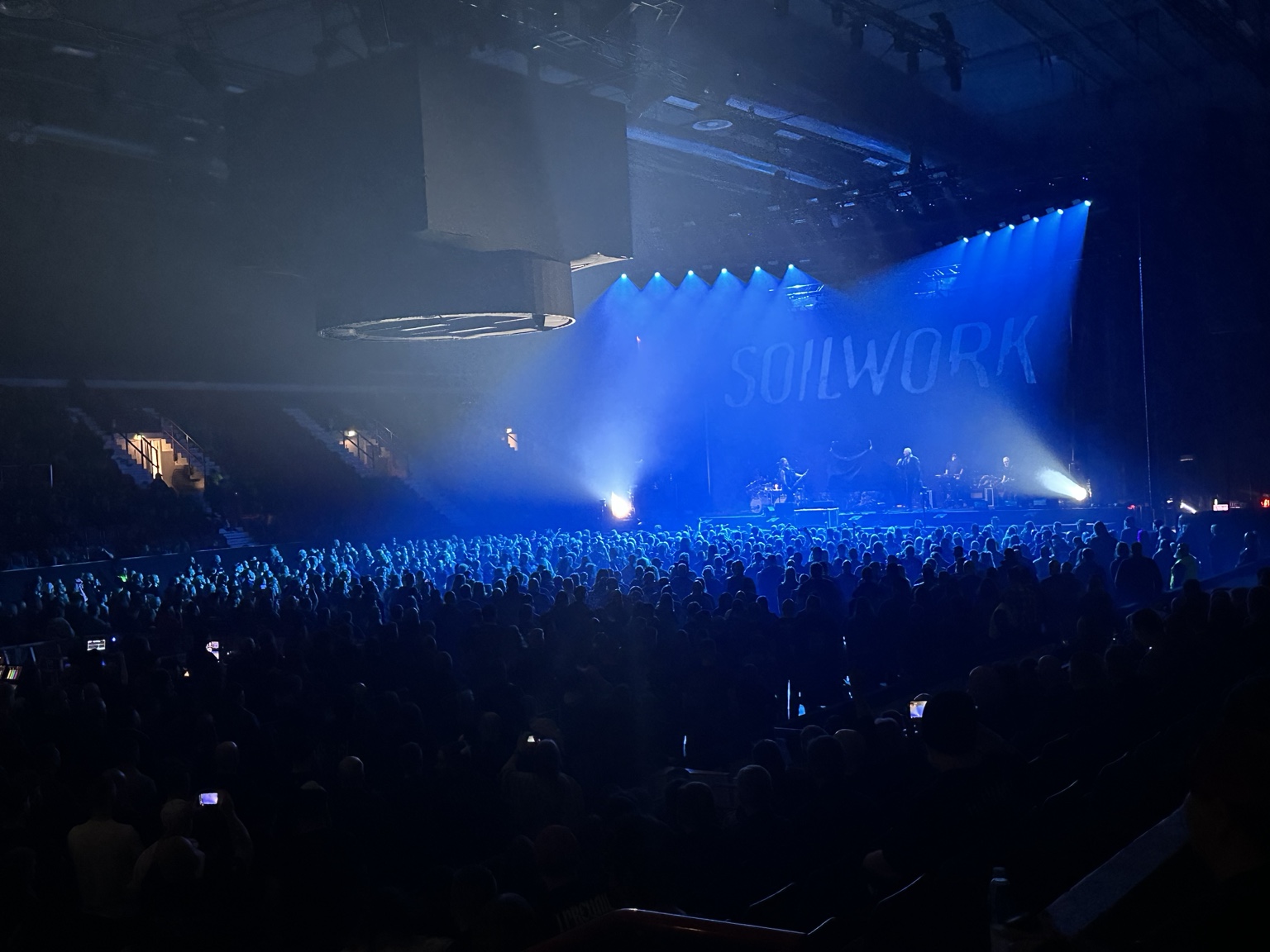
Soilwork: Experience, precision and a mosh pit coming alive
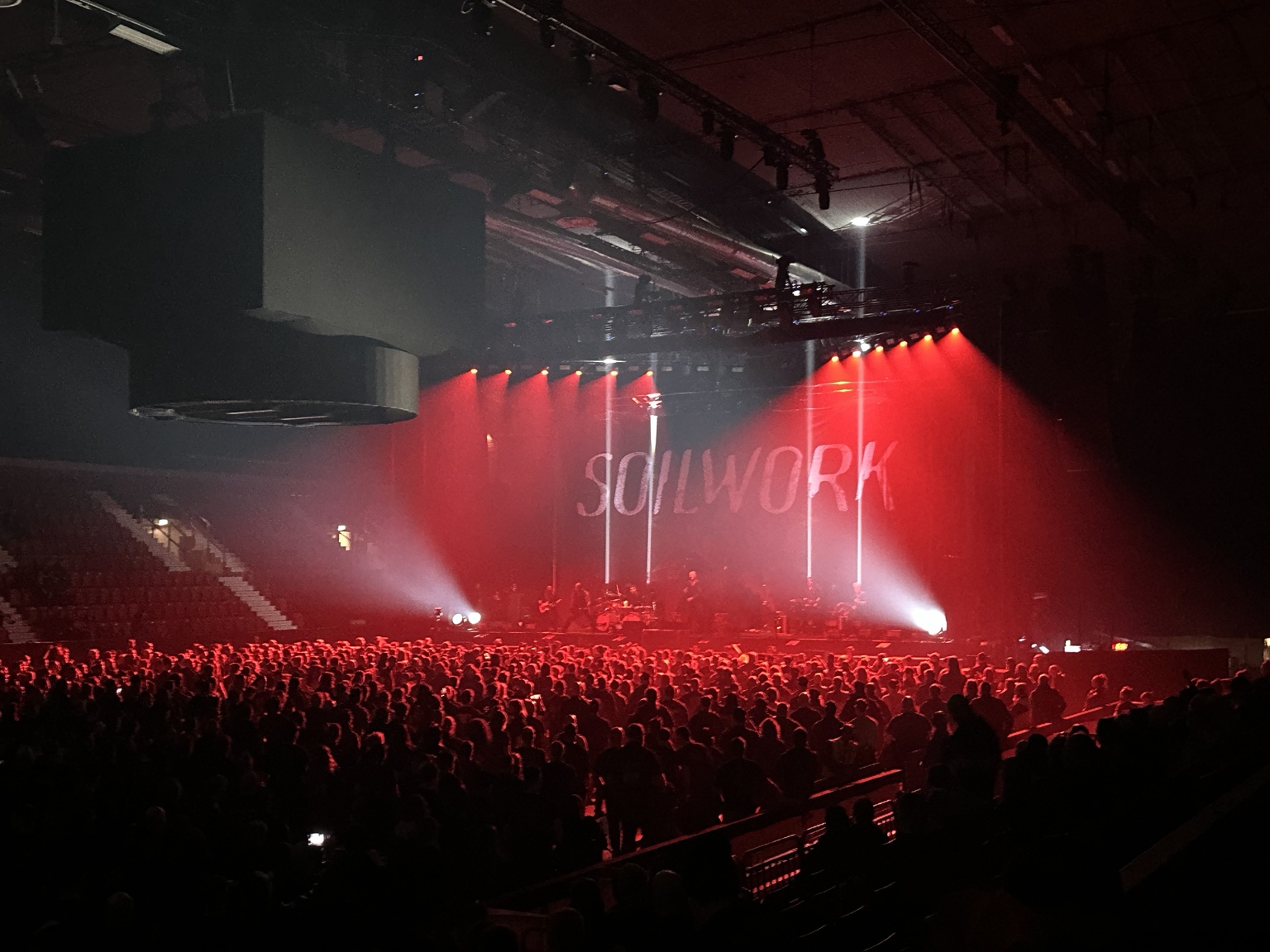
Soilwork had the responsibility of opening the evening’s musical assault, and the Swedish veterans demonstrated exactly why they remain such a respected name in melodic death metal.
There is something special about watching a band with decades of experience perform with conviction rather than simply relying on its reputation. Soilwork brought a strong combination of melodic sensibility, aggression and professional precision to the stage. Their performance built momentum as the set progressed, and the audience responded accordingly.
One of the defining moments came with “Figure Number Five.” As the blue lights swept across the stage, the atmosphere began to change. The crowd’s energy rose noticeably, and the mosh pit finally woke up. It was a satisfying moment: the familiar song gave the audience something to grab hold of, and the response spread through the floor.
“Spirit of No Return” brought another surge of activity. Björn Strid actively encouraged the crowd to make the mosh pit bigger, and the invitation worked. Rather than remaining a passive audience, people became part of the performance, adding movement and intensity to the music.
“Death Diviner” was another highlight of the set. Throughout the performance, Soilwork showed the balance that has become central to their identity: forceful instrumentation combined with memorable melodies and a vocalist capable of moving between different expressions without losing control.
Strid’s voice deserves particular recognition. Toward the end of the performance, he reached a piercingly clear, remarkably high register that brought an almost power-metal quality to the moment. After more than three decades of activity, that kind of vocal control is impressive. His high notes could probably have frightened every bat flying through the Helsinki night sky.
Soilwork delivered a confident opening performance that grew stronger as the crowd warmed up. They did not merely fill the time before the next band; they established a serious level of musicianship and energy for the evening.
Orbit Culture: A cinematic assault from another dimension
If Soilwork brought experience and melodic precision, Orbit Culture arrived with the impact of a cinematic explosion.
The beginning of their set felt like stepping into a cinema to experience the original Die Hard for the first time: immediate, explosive and impossible to ignore. There was a sense of scale to the performance, with the music creating the feeling that something enormous was unfolding in front of the audience.
Niklas Karlsson’s voice was one of the night’s most distinctive weapons. His exceptionally deep, powerful vocal delivery gives Orbit Culture a character that is difficult to confuse with anyone else. In melodic death metal, where countless bands compete to sound heavier and darker, Karlsson’s voice stands out as an identity of its own. It is so formidable that one could imagine the Swedish ferries in the harbour turning around by the second song.
The drumming was equally impressive. The drummer attacked the kit with extraordinary speed and force, while the double-bass patterns seemed to rise from somewhere deep beneath the earth. The sheer weight of the rhythm gave the songs a physical intensity, reinforcing the band’s dark, cinematic atmosphere.
During “Strangler,” Orbit Culture made a clear effort to connect with the audience. The response from the mosh pit grew louder, with crowd participation adding another layer to the performance. The interaction helped turn the set from a powerful display onstage into a shared experience between band and audience.
The set reached a ferocious high point with “Vultures of North.” The energy felt like lava erupting through a ceiling — overwhelming, hot and impossible to contain. It was the kind of performance where the music seems to exceed the boundaries of the stage and take control of the entire room.
When Orbit Culture finished, the band received huge applause. It was a fitting response to a set that combined crushing heaviness, remarkable musicianship and a cinematic sense of drama. Orbit Culture did not simply prepare the audience for the headliners; they made a powerful statement of their own.
Amon Amarth: The Allfather awakens in a storm of fire
Then came the headliners.
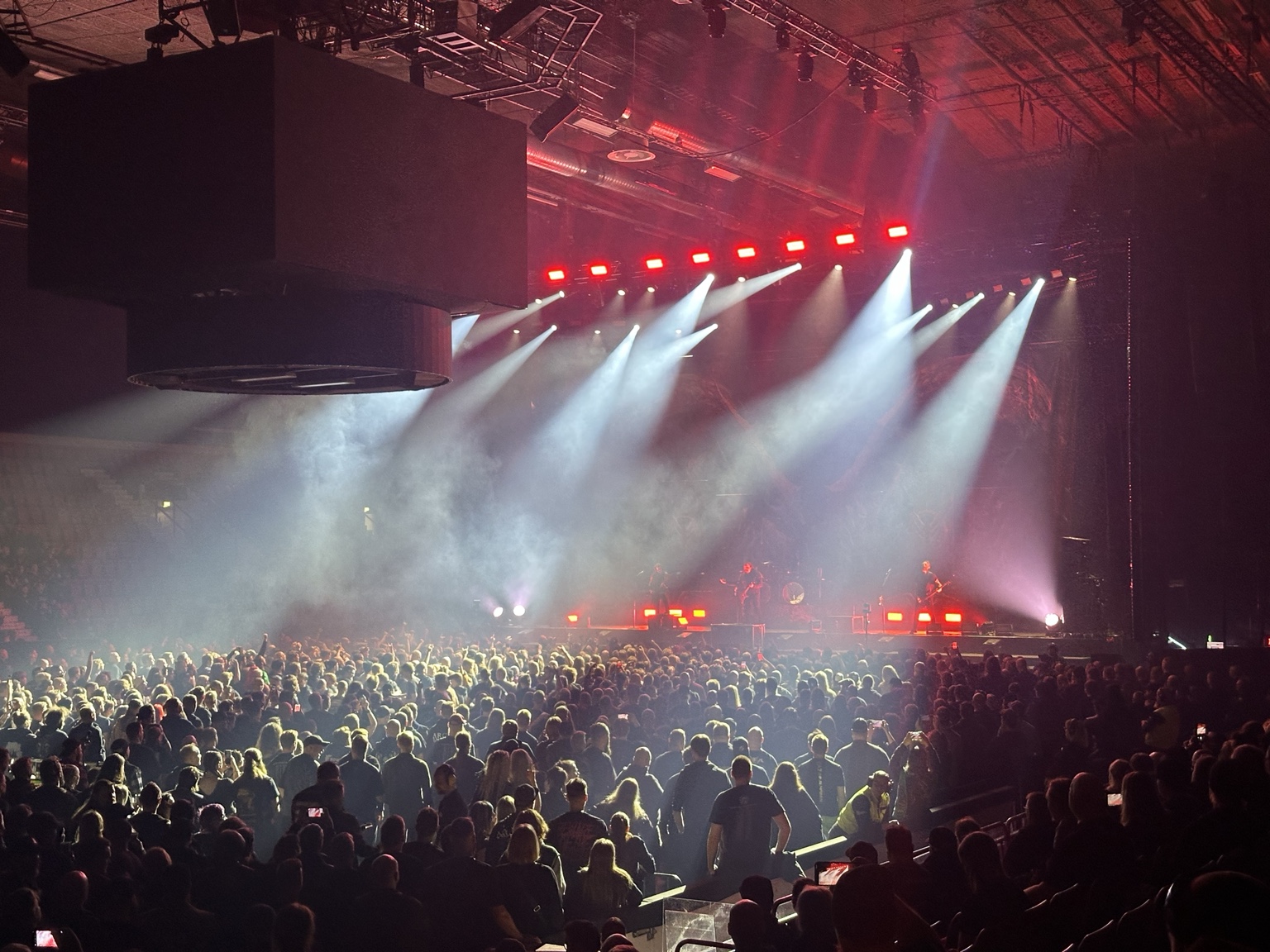
As Amon Amarth took the stage, the atmosphere shifted into something larger than an ordinary metal concert. The band emerged like modern Vikings charging into a storm, surrounded by an imposing stage design built around Norse imagery, monumental structures and a dramatic Viking ship-inspired backdrop.
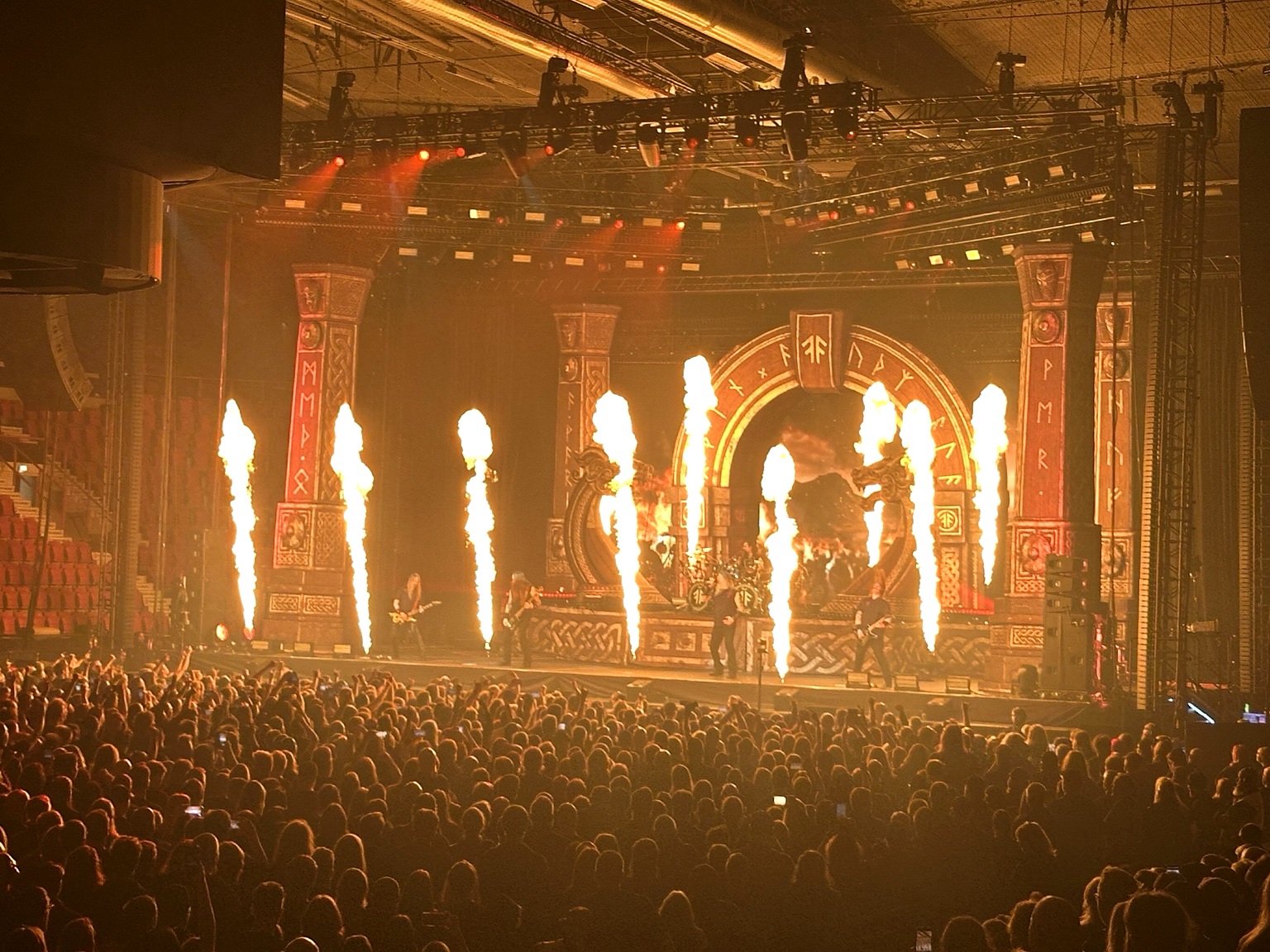
The production was spectacular. Towering columns, intricate runic details and a massive circular structure framed the stage, creating the impression of an ancient gateway opening into another world. The lighting moved between deep reds and blazing orange tones, giving the performance a sense of danger and mythological scale.
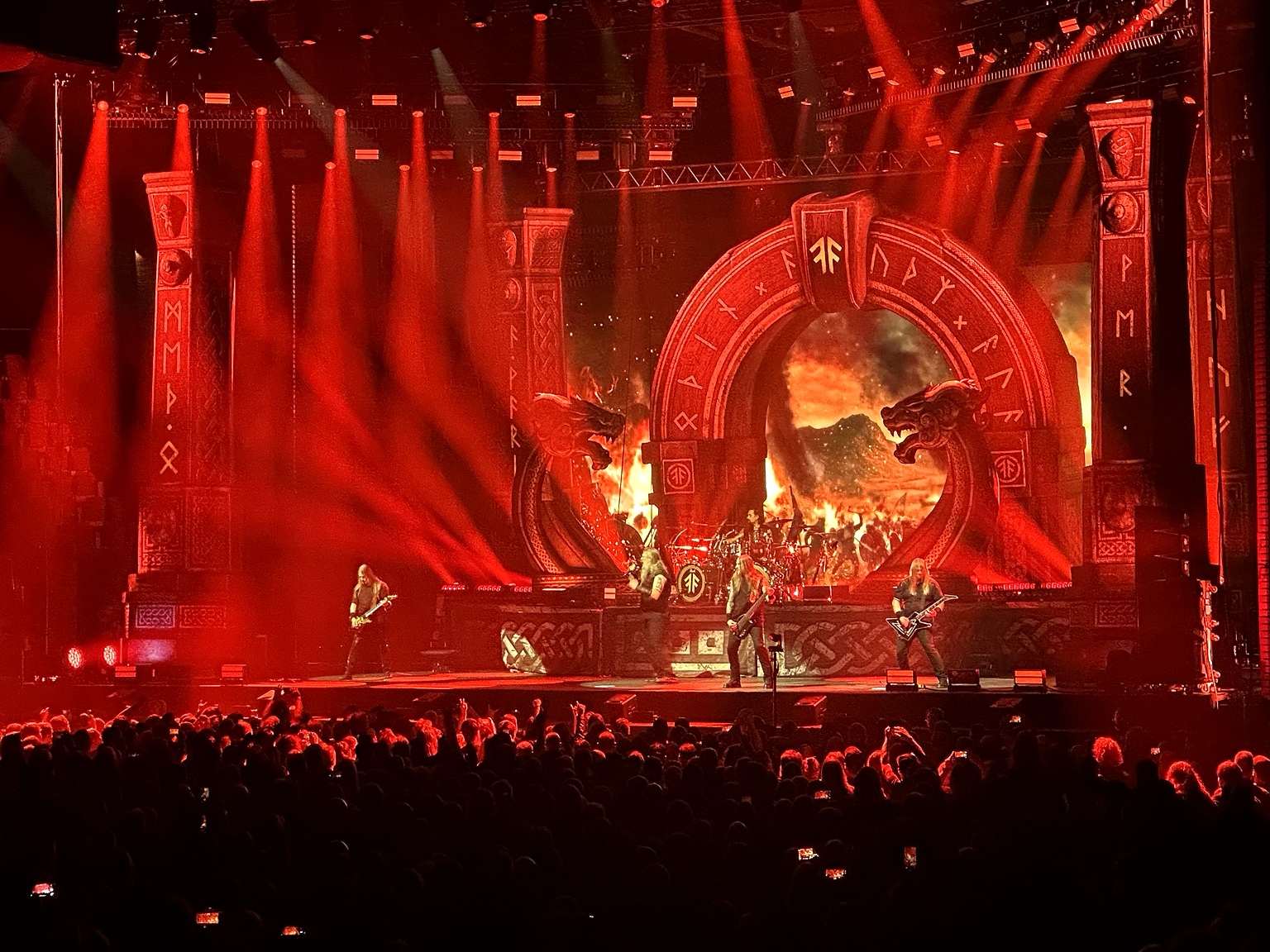
At the centre of it all stood Johan Hegg, whose deep growl remains one of the defining sounds of Viking metal. His voice rolled through the hall with a dark, rumbling force. Even from the stands, his magnificent beard was impossible to miss — an imposing part of the unmistakable presence he brings to the stage.
Amon Amarth have spent decades developing a musical identity rooted in heavy riffs, powerful rhythms and Norse mythology. Here, those elements were supported by a production that made the band’s visual world tangible. The guitars carried a thick, heavily distorted weight, while the drums struck with ferocious force. Together, they created a sound that felt as though it had emerged from the underworld.
Fire, darkness and a towering figure
The second song delivered one of the most memorable visual moments of the performance. Real flames erupted across the stage, sending towering columns of fire into the air. At the same time, a nearly three-metre-tall figure resembling the Grim Reaper strode across the stage, adding an imposing theatrical presence to the spectacle.
The combination of fire, darkness and monumental imagery transformed the performance into something far beyond a conventional concert. The stage effects were not merely decorative; they helped bring Amon Amarth’s mythological universe to life.
The heat could be felt throughout the hall, as if the audience had suddenly found itself standing on a boiling planet on Mars. The flames were spectacular to watch, but their presence was physical too. For a moment, the entire arena seemed to become part of the inferno unfolding onstage.
Yet the spectacle never overshadowed the music. Amon Amarth played with confidence and precision, delivering their crushing riffs and thunderous rhythms with the assurance of a band entirely in command of its performance. Fire, theatrical darkness and Viking mythology collided in a breathtaking display of live metal.
New songs, familiar power and a connection with Helsinki
Amon Amarth’s newer material proved genuinely infectious. The songs carried a memorable quality that sat naturally alongside the band’s heavier sound, and the performance made it easy to understand how the group continues to connect with audiences while evolving its catalogue.
For the remainder of the performance, I found myself watching these metal giants in awe, taking in the scale of the production, the power of the music and the confidence with which the band commanded the arena.
One particularly memorable detail came when Johan Hegg spoke to the audience in Finnish. Hearing the frontman address the Helsinki crowd in their own language was a wonderful gesture, adding a personal touch to a performance already filled with larger-than-life imagery. It helped create a connection between the band and the audience beyond the spectacle of the flames and towering stage set.
Amon Amarth remain masters of atmosphere. Their show combines the direct physical force of heavy metal with theatrical storytelling, creating a performance that feels both enormous and unmistakably theirs. The production gives the mythology a visual form, but it is the band’s musical confidence and commanding presence that hold everything together.
A huge thank you to Amon Amarth for a memorable experience. Here is to another two decades of the band reigning as the gods of Viking metal.
Three bands, three different strengths
What made this Helsinki bill work was the contrast between its three acts.
Soilwork demonstrated the value of experience, melodic craft and a vocalist who continues to impress with his range. Orbit Culture brought a darker, cinematic intensity, combining an immense vocal presence with punishing drumming and an explosive connection with the crowd. Amon Amarth then raised the scale of the evening with a monumental production, real fire and a performance built around the unmistakable force of Viking metal.
Each band offered a different interpretation of heaviness. Together, they made a compelling case for the continuing vitality of the Swedish metal scene.
Leaving Helsinki with the sound of the evening still ringing in my ears, the journey from Turku felt more than worthwhile. This was a night of powerful performances, memorable visual moments and the kind of atmosphere that reminds you why live metal remains such a singular experience.
For Metal Madness Weekly, it was a privilege to witness and document the evening. And for everyone inside Helsinki Ice Hall, the message was clear: Swedish metal still knows how to hit hard, command a stage and leave an impression long after the lights go down.
Amon Amarth’s Allfather awakened in Helsinki — and the hall felt the heat.
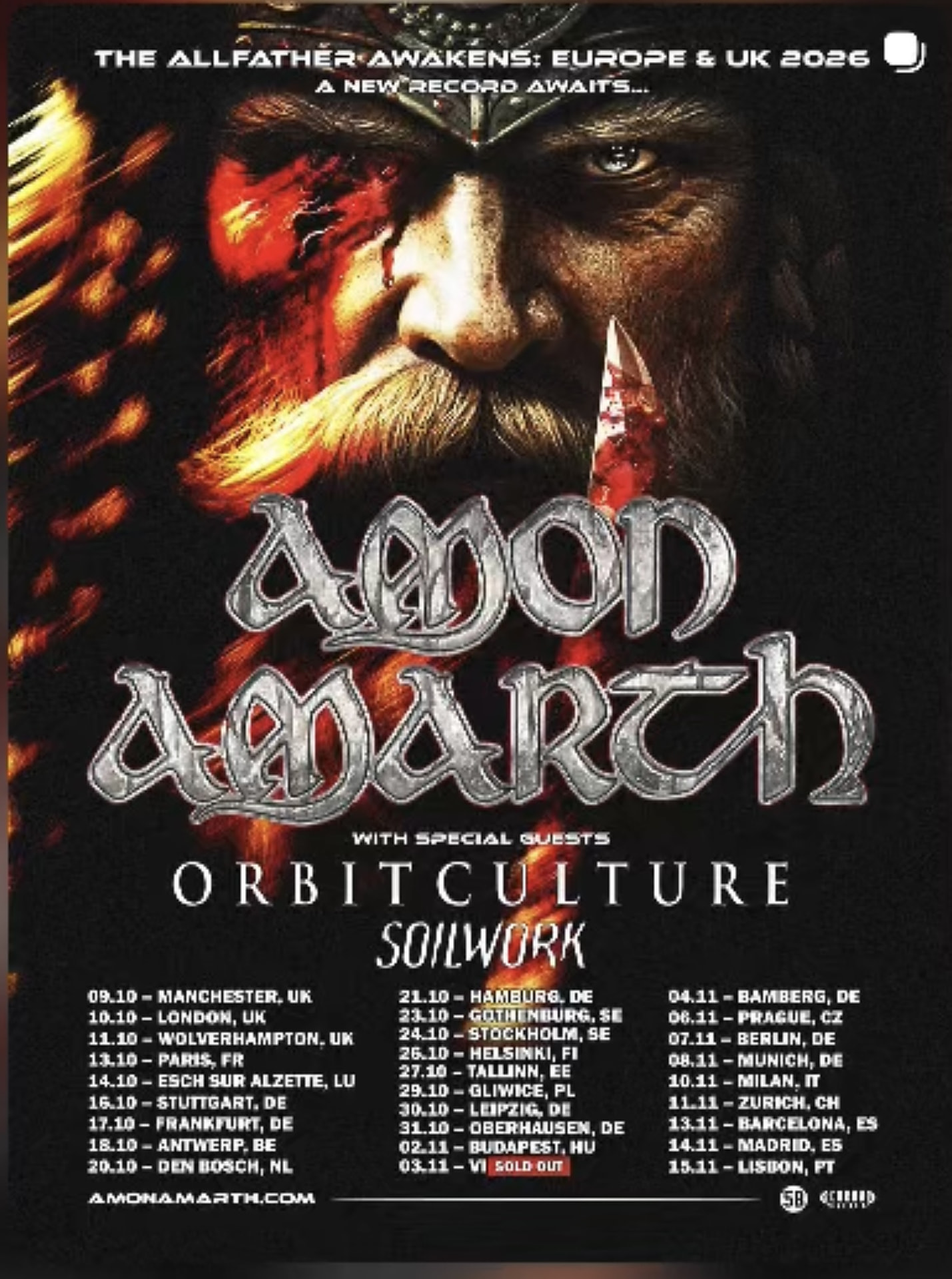
Live report | Helsinki Ice Hall, Finland | 26 October 2026 — The Allfather Awakens: Europe & UK 2026 Tour
Words and photographs: Tomi Perrakoski | Metal Madness Weekly
https://metalmadness.world/
© Tomi Perrakoski / Metal Madness Weekly
Amon Amarth Bring Fire, Fury and Viking Grandeur to Helsinki in Pictures
// Gallery
- Amon Amarth
- Soilwork
- Orbit Culture
- The Allfather Awakens
- Helsinki Ice Hall
- Live Report
- Concert Review
- Swedish Metal
- Viking Metal
- Tomi Perrakoski
- Metal Madness Weekly